Is Your Parking Facility Losing Revenue? Smart Parking Technology for Atlanta Properties
Warning Signs Your Parking Operation Has Outgrown Its Current Technology
A parking facility is often one of the first and last parts of a property that visitors experience. When the system works well, vehicles enter, pay, park, and exit with very little effort. When the equipment is outdated or poorly connected, however, even a simple parking transaction can become a source of frustration for drivers, employees, and property managers.
For commercial properties in Atlanta, Marietta, Alpharetta, Roswell, Sandy Springs, Suwanee, and surrounding communities, an inefficient parking operation can create more than long lines. It may also contribute to lost revenue, unauthorized parking, inaccurate reporting, and frequent service calls that place additional strain on the facility’s staff and budget.
Many property managers become accustomed to recurring parking problems because the system still technically operates. A gate may eventually open, a ticket machine may work after several attempts, or an employee may manually assist drivers when equipment fails. These workarounds can make an aging system appear functional even while it creates expensive inefficiencies every day.
One of the clearest warning signs is vehicle congestion at entrances or exits. A slow card reader, unreliable ticket dispenser, outdated payment station, or delayed gate can cause vehicles to stack up quickly during busy periods. These delays may be especially noticeable at hospitals, office buildings, hotels, event venues, apartment communities, and mixed-use developments.
Common signs that a parking facility may have outgrown its current technology include:
- Vehicles regularly backing up at entrances or exits
- Ticket dispensers, card readers, or payment machines failing repeatedly
- Employees frequently opening gates manually
- Drivers struggling to understand or use the payment equipment
- Limited support for mobile, digital, or contactless payments
- Difficulty reconciling payments with recorded parking activity
- Incomplete or unclear records of vehicle entry and exit
- Unauthorized vehicles entering permit-only areas
- Separate parking, access-control, and payment systems that do not communicate
- Repeated service calls for aging hardware
- Little or no visibility into occupancy, peak demand, or revenue performance
Equipment downtime can have an immediate financial impact. If a payment terminal stops accepting cards or a ticket station fails, drivers may be waved through without paying. In other situations, malfunctioning equipment can trap vehicles inside the facility, creating complaints and forcing employees to abandon their normal responsibilities to resolve the problem.
Lost revenue may also occur in less obvious ways. Unauthorized parking, shared credentials, unreadable tickets, incorrect validations, and inaccurate occupancy records can all reduce the amount of revenue a facility collects. When management lacks reliable reporting, it may be difficult to determine how much money is being lost or where the losses are occurring.
Parking systems that depend heavily on cash can create additional challenges. Cash collection requires secure handling, regular machine servicing, manual reconciliation, and careful oversight. Digital and contactless payment options can reduce some of this administrative burden while offering visitors a more familiar and convenient way to pay.
A lack of useful reporting is another sign that modernization may be needed. Property managers should be able to understand how many vehicles use the facility, when demand is highest, how long drivers typically stay, and which payment methods are being used. Without this information, decisions about pricing, staffing, enforcement, and future upgrades may be based on estimates rather than actual data.
Operational problems that deserve a professional parking-system evaluation include:
- Frequent lane closures caused by equipment failure
- Unexplained differences between expected and collected revenue
- Long driver wait times during peak arrival or departure periods
- Repeated complaints about tickets, payments, or gate access
- Staff spending significant time troubleshooting parking equipment
- Difficulty managing monthly parkers, visitors, employees, and vendors separately
- No practical way to monitor the facility remotely
- Limited ability to expand the system as the property grows
A parking system can continue opening and closing gates while still failing to meet the property’s needs. The true question is not simply whether the equipment turns on. Property managers should also consider whether the system moves vehicles efficiently, collects the correct payments, supports staff, provides useful information, and creates a positive experience for users.
Modernization does not always require replacing every existing component. In some facilities, newer software, license plate recognition, digital payment tools, or updated lane equipment can be integrated with portions of the current system. A professional assessment can identify which equipment remains useful and which components are creating the greatest operational and financial problems.
Power Access Control can evaluate the physical equipment, access-control technology, payment process, and management platform as one connected parking operation. This broader approach helps Atlanta-area property managers understand whether recurring problems are caused by aging hardware, disconnected systems, limited software, or a combination of several issues.
Addressing those weaknesses can help reduce congestion, improve reporting, simplify payments, and give management greater control over who is using the facility. For properties that depend on parking revenue or need reliable vehicle access, upgrading the technology can improve both daily operations and long-term performance.

What Can a Modern Parking Management System Do?
Modern parking technology can connect the equipment in each lane with payment tools, access credentials, occupancy information, and management reporting. Instead of treating the gate, ticket machine, camera, and payment station as separate devices, an integrated system allows them to work together as part of one managed operation.
The exact design depends on the property. A hotel may need guest validation and event parking. An office building may require monthly employee access and visitor payments. A hospital may need dependable public parking, reserved areas, emergency access, and detailed reporting. A mixed-use development may need to manage residents, shoppers, employees, deliveries, and short-term visitors within the same facility.
Modern parking solutions may include:
- Parking access and revenue-control systems
- Automated gates and barrier arms
- License plate recognition cameras
- Mobile and contactless payment options
- Digital permits and visitor credentials
- Cloud-based management platforms
- Real-time occupancy monitoring
- Validation tools for tenants, businesses, hotels, or events
- Revenue, transaction, and equipment-performance reporting
- Demand-based pricing and parking optimization
- Integration with EV-charging stations
- Remote system monitoring and management
Digital payment options can make parking easier for visitors while reducing dependence on cash and physical tickets. Depending on the facility, drivers may be able to pay at a kiosk, use a mobile device, scan a code, enter a license plate number, or complete payment automatically through a registered account.
Cloud-based management can give authorized staff access to activity, equipment status, revenue information, and parking records without requiring them to stand beside the lane equipment. This can be especially helpful for property management companies overseeing multiple parking facilities or facilities that do not have employees stationed at every entrance.
Real-time occupancy data can also help managers understand how the property is being used. Rather than relying on occasional manual counts, the system can provide information about available spaces, busy periods, average parking duration, and traffic patterns. That information can support decisions about pricing, staffing, signage, and future expansion.
A connected parking platform may also improve maintenance planning. Repeated device errors, lane interruptions, and unusual transaction patterns can be identified through system reporting. Addressing a developing equipment problem before a complete failure may help the facility avoid emergency repairs and extended lane closures.
How License Plate Recognition Improves Entry and Oversight
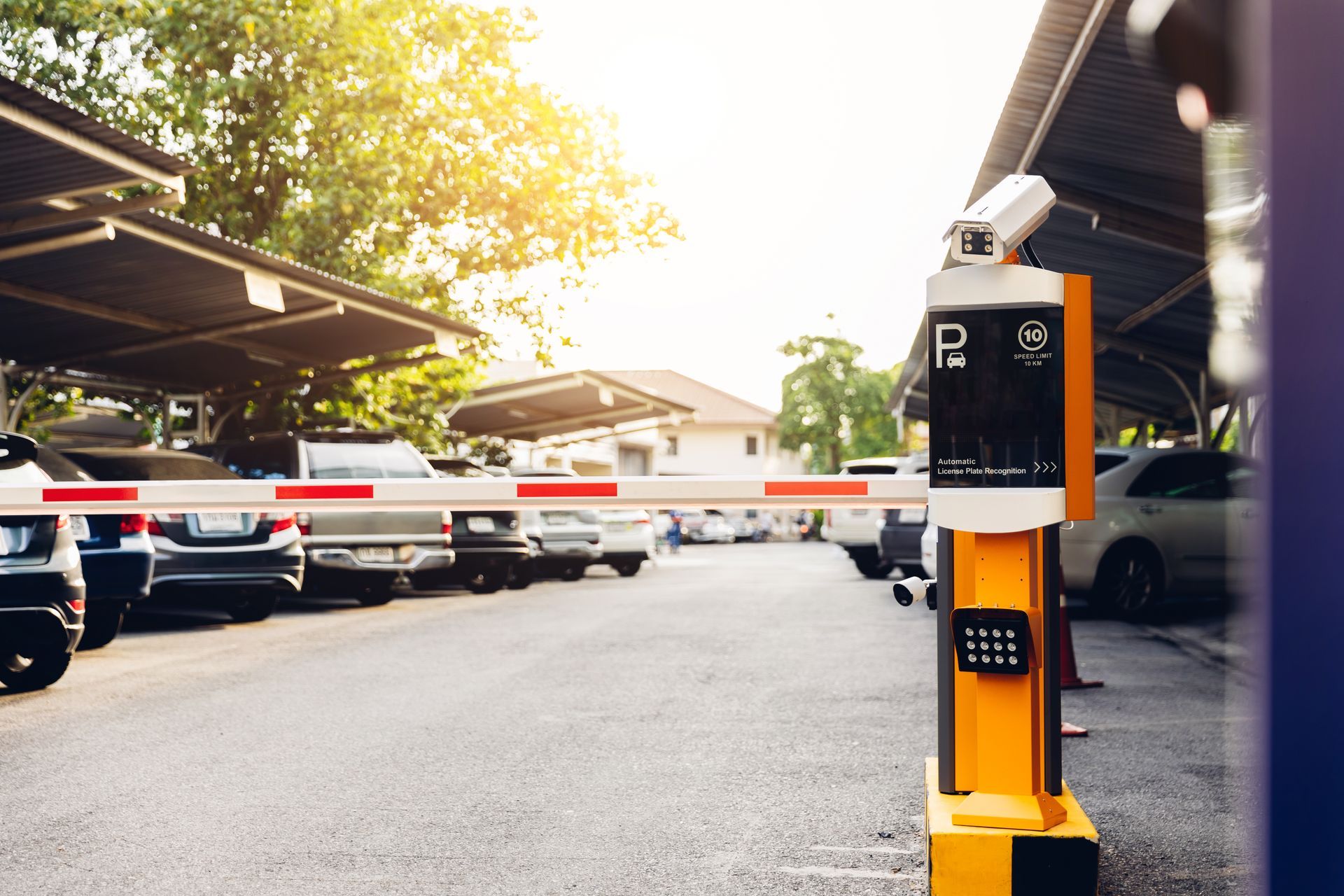
License plate recognition, often called LPR, uses cameras and software to capture and process vehicle license plates as they approach an entry or exit. The plate can then be checked against permit records, payment information, access permissions, or other rules established by the facility.
Depending on the system design, LPR can reduce reliance on paper tickets, key cards, windshield tags, or other physical credentials. Registered vehicles may be recognized automatically, allowing approved drivers to enter with less stopping and less interaction with equipment.
A typical license plate recognition parking process may work like this:
- A vehicle approaches the parking entrance.
- A camera captures the vehicle’s license plate.
- The system compares the plate with access, permit, validation, or payment information.
- The vehicle is approved, denied, or directed to complete payment.
- The gate or barrier arm responds according to the system rules.
- The entry event is recorded in the management platform.
- Staff can review the activity, transaction, or access record when needed.
LPR can be useful in many types of facilities, including:
- Hotels and conference centers
- Hospitals and medical campuses
- Office buildings and corporate campuses
- Apartment and condominium communities
- Universities and educational facilities
- Event venues and entertainment districts
- Mixed-use developments
- Commercial parking garages
- Employee and fleet parking areas
- Government and secured facilities
For monthly parkers or authorized employees, license plate recognition can create a more convenient entry process because the vehicle itself becomes part of the credential. For visitors, the plate can be connected to a payment, hotel stay, reservation, event ticket, or digital validation.
The technology can also create more useful records. Management may be able to review entry and exit times, identify recurring access attempts, locate a specific vehicle record, or compare parking activity with payment data. This information can improve oversight and make it easier to investigate disputes or unusual activity.
Camera placement and system configuration are important. Lighting, lane width, vehicle speed, camera angle, weather exposure, and plate visibility can all affect performance. Professional installation helps ensure that the camera is positioned for the actual conditions at the property rather than installed as a generic security camera.
License plate recognition works best when it is coordinated with the rest of the parking system. The cameras, gates, payment platform, access rules, and management software should share information accurately. A disconnected camera system may capture images, but it will not provide the same operational value as a properly integrated parking solution.
Power Access Control can combine vehicle access equipment, LPR, payment technology, cloud management, revenue-control tools, and business intelligence into a system designed around the facility. This helps property managers see more than individual transactions. They can gain a clearer understanding of how the parking operation performs as a whole.
For Atlanta properties, modern parking technology can make entry faster, payments easier, and reporting more useful. The right system can support both the drivers using the facility and the staff responsible for managing it every day.

What Should Property Managers Consider Before Upgrading?
A successful parking-system upgrade should begin with the needs of the property rather than a preselected equipment package. Two facilities with the same number of spaces may have very different traffic patterns, payment requirements, security concerns, and management responsibilities.
The planning process should consider how the facility operates today, which problems need to be corrected, and how the property may change in the future. A system designed only for current traffic may become inadequate if the property adds tenants, expands visitor parking, changes payment policies, or installs EV-charging stations.
Important planning factors include:
- The number of vehicle entrances and exits
- Daily and peak-hour traffic volume
- The mix of visitors, employees, residents, vendors, and monthly parkers
- Existing gates, barrier arms, ticket machines, cameras, and payment stations
- Available network, electrical, and communication infrastructure
- Hourly, monthly, validated, reserved, or event-parking requirements
- Cash, card, mobile, and contactless payment preferences
- Security, enforcement, and reporting needs
- Staff availability and remote-management requirements
- Integration with building access control or tenant systems
- Future expansion and EV-charging demand
Property managers should also identify who will use the system and what experience each group needs. Employees may need automatic entry. Hotel guests may require validation linked to their stay. Retail customers may receive discounted parking after a purchase. Event visitors may need temporary access that expires after a specific period.
Questions to answer before selecting a parking solution include:
- Who uses the facility on a normal day?
- How should occasional visitors enter and pay?
- Which vehicles should receive automatic access?
- Does the facility need hourly, monthly, reserved, or validated parking?
- Which reports does ownership or management need?
- Should the system integrate with existing building access control?
- Does management need to control the system remotely?
- Will the parking operation expand to additional lanes or properties?
- How should lost tickets, disputed charges, and equipment failures be handled?
- Will EV-charging payments or access be included?
An assessment of the existing equipment can help determine whether a complete replacement is necessary. Some gates, lanes, conduit, cameras, or electrical components may remain usable. In other cases, keeping aging hardware may limit the performance of the new technology or create ongoing maintenance problems.
A phased upgrade may be appropriate for facilities that cannot close every entrance or exit at the same time. Work can sometimes be completed one lane, level, or system component at a time. Careful planning helps maintain vehicle access while reducing disruption to tenants, customers, and employees.
The upgrade process may include:
- Reviewing the existing parking operation and equipment
- Identifying revenue, access, payment, and traffic problems
- Documenting the facility’s technical and operational requirements
- Selecting compatible lane equipment, cameras, software, and payment tools
- Planning installation around traffic and property schedules
- Integrating the new technology with existing systems where appropriate
- Testing vehicle access, payments, reporting, and emergency operation
- Training staff to manage and troubleshoot the completed system
Professional installation matters because parking equipment must operate reliably in a demanding environment. Cameras need the correct field of view. Barrier arms must be positioned and configured safely. Readers, payment stations, and lane devices must communicate with the management platform. Wiring and network connections must also be protected from weather, vehicles, and daily wear.
Smart Parking-System Installation in Atlanta and the Southeast
Power Access Control provides commercial parking technology for properties in Atlanta and throughout the Southeastern United States. The team can evaluate an existing facility, identify operational weaknesses, and design a solution that combines access control, vehicle identification, payments, automation, and reporting.
Available parking solutions may include:
- Parking access and revenue-control systems
- License plate recognition technology
- Automatic gates and barrier arms
- Mobile, digital, and contactless payments
- Cloud-based parking management
- Digital permits and visitor access
- Occupancy and performance reporting
- Revenue-management and business-intelligence tools
- Integration with building access-control systems
- EV-charging and payment integration
- Modernization of existing parking facilities
Modernizing a parking operation can help reduce the number of manual tasks assigned to property staff. Automated access, digital payments, remote monitoring, and detailed reporting allow employees to focus on exceptions rather than managing every vehicle transaction individually.
The system can also create a smoother experience for drivers. Faster entry, clearer payment options, dependable gates, and fewer ticket problems can reduce frustration and improve the way visitors perceive the entire property.
For revenue-generating facilities, accurate transaction records and stronger access oversight can help management identify missed payments, unauthorized use, and underperforming areas. Better information supports better decisions about pricing, validation policies, staffing, and future investments.
Power Access Control serves commercial properties in Atlanta, Marietta, Alpharetta, Roswell, Sandy Springs, Suwanee, and communities throughout Georgia and the Southeast. Solutions can be designed for parking garages, hospitals, hotels, office campuses, apartment communities, mixed-use developments, universities, event facilities, and other managed properties.
If your parking facility experiences recurring equipment failures, long lines, limited reporting, payment problems, or unexplained revenue loss, contact Power Access Control. A professional assessment can help determine which technologies will improve the operation and how the new equipment can be integrated with the systems already in place.
A smarter parking system does more than open a gate. It can improve traffic flow, strengthen oversight, simplify payments, provide valuable business information, and help the property capture the revenue it has been missing.
RECENT PROJECTS